Table Of Content

Other times, cats can use "power grooming" as a way to intimidate other felines and chase them away from a favorite territory. Cats will spend about 30%-50% of their time grooming themselves. Grooming keeps their fur and skin healthy and keeps them cool on hot days. Cats learn their grooming behavior as kittens from their mother grooming them. In fact, most of a cat’s behavior is learned, much like it is from our parents.
Help us make PetMD better
If your cat starts to lick you, you should immediately pull your head away or move your cat away to stop them. If that bad behavior extends to grooming your hair too, you might have a problem to address. Your hair should also not be harmed by your cat’s occasional licks. If your cat can smell leave-in conditioner or hair products of any sort, they’ll usually steer clear of your hair anyway, they won’t go near anything that hurts their sensitive noses. It could be genuine love and affection toward their owner – the same thing their mother would do to them as a kitten.
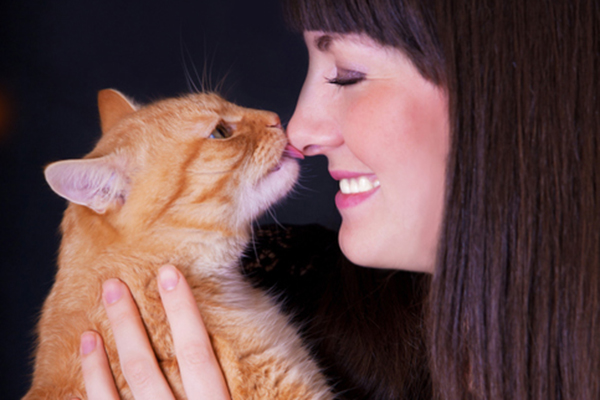
Cats groom humans as a show of affection
What’s more, the highly sensitive personalities of cats can cause your cat to feed off of any stress signals you’re giving off. All cats are individuals and some are more friendly than others. We usually have to develop a close bond with them before a cat will feel comfortable enough to sleep beside us or lick us. When they do, it is not only a sign of comfort, but a sign of great affection. As we have stated above, cats lick each other and themselves to keep them clean.
Use Citrus Scented Products
Before we begin decoding the mystery of why cats lick human hair, let’s take a moment to understand the importance of grooming in a cat’s life. Grooming plays a vital role in maintaining a cat’s physical health and mental well-being. It helps them keep their fur clean, free from matting, and healthy. When cats groom their human owners by licking their hair, it’s clear that the behavior is driven by more than just hygiene. Knowing this biological detail helps us better understand the feline species and their interactions with people.
Does my cat love me? Science explains - Inverse
Does my cat love me? Science explains.
Posted: Mon, 19 Apr 2021 07:00:00 GMT [source]
That's when her owner suddenly noticed she had a cat that licked too much. Licking comes naturally to cats, but sometimes this normal grooming urge crosses the line into obsessive behavior. If your cat's licking seems excessive in frequency or duration, don't ignore the problem. Here's what you can do if you suspect your cat's habitual grooming behavior isn't so normal anymore. Should your cat’s hair-licking behavior become a nuisance to you (or to her tummy), stop the action as soon as it starts by simply leaving the room.
Want to give your cat better care every day? Get our free day to day care guide.
Fact is, your cat’s tongue is home to various kinds of bacteria. So, if you have an open wound or if you’re immunocompromised, it would be wiser to avoid getting licked by your cat. Beyond showing affection, your cat is quite possibly marking you as their territory. Licking you (and your hair) is a way of claiming you as a part of their territory. Using this method, they’re letting everyone (particularly other cats) know that you belong to them.
Sure, cats are often not as expressive about their feelings as a dog, but this doesn’t make them any less real. Cats tend to do exactly what they want to do whenever they want to do it. That is part and parcel of cat ownership and something that we must always consider. Since 2015, I've been captivated by the enchanting world of cats, led by my feline companion, Mia.
Why Do Some Cats Groom Their Owner's Hair?
While we provide information resources and canine education, the content here is not a substitute for veterinary guidance. Cats also clean themselves and others when they are dealing with a lot of stress. The process soothes them and helps them settle down a bit in tense situations. To help her calm down, try to find a dark, quiet place for her to go to where she can relax and have some time to herself. I am an experienced pet owner with decades of experience owning a number of different pets, from traditional pets like dogs and cats, to the more exotic like reptiles and rodents.
Cats may enjoy the texture of human hair, causing them to want to lick it.
Rather, let it call to mind the profound understanding you now hold of their communication tactics, health, and ways you can meaningfully respond. Cats, like any other animals, use various forms of communication to express their feelings and needs. One of the behaviors that cats often employ with their human owners is licking, which is akin to the grooming behavior observed among wild cats. Cat grooming, or allogrooming, is a social activity that serves several functions, such as establishing social bonds, maintaining cleanliness, and even reducing conflict within the group. This act is a sign of intimacy and trust among cats as it exposes them to potential harm while they are preoccupied with grooming.
Actually, a lot of times, the more dominant cat in the household will allogroom less dominant cats – meaning it’s likely dominance has a big role in grooming between cats. If you have a cat who licks and grooms a new individual’s hair, it may be that he or she feels the newcomer to also be part of the family or tight knit group. Besides the shampoo you’re using, the oils your scalp produces or your hair itself could taste good to cats who like licking hair. So if the urge to lick cats strikes, pet them – cats often groom each other around the head and neck, so focus on petting and rubbing them here for a similarly intimate experience. Humans use an array of different products in their hair, and the scent of them can be enticing to some cats.
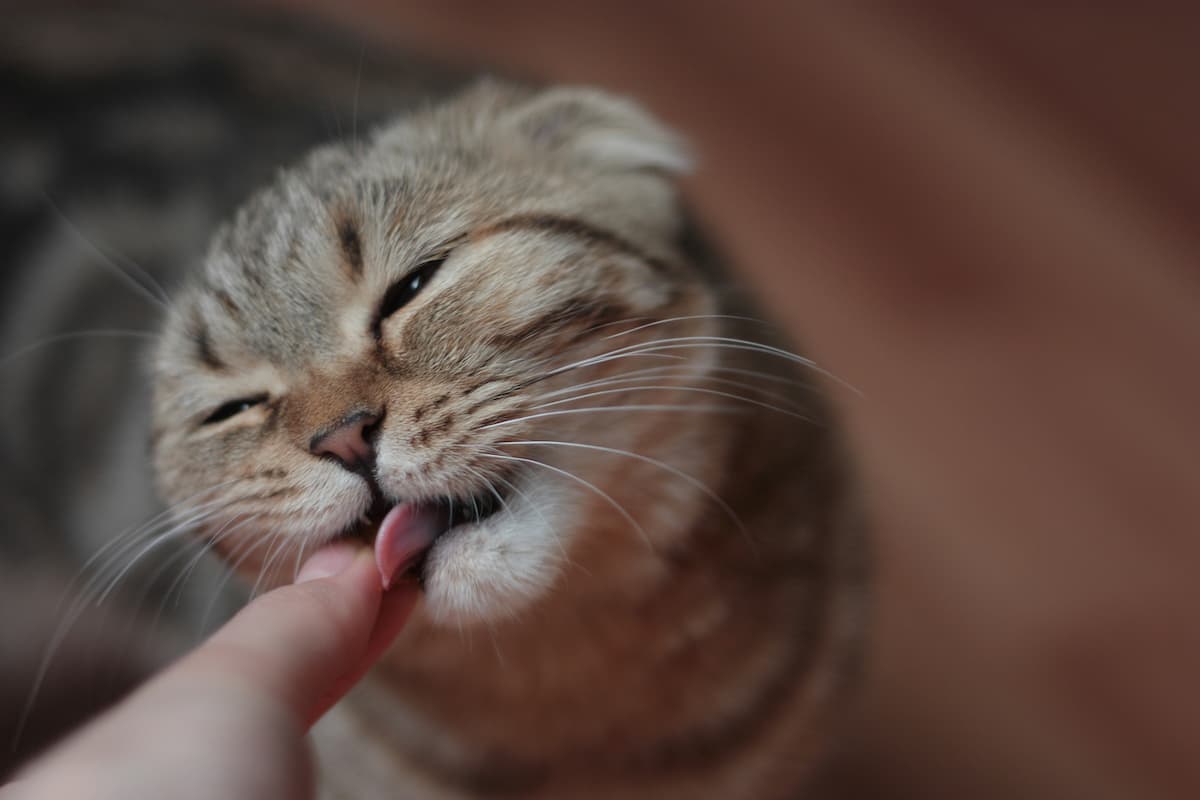
When our cat sees us lying down, they may come over to lick us so we are clean before we sleep. The cat will often lick a human, lick themselves and then go down to sleep at our feet. You may feel the need to return your affection by licking your cat back, but this is not recommended. A cat’s fur can harbor bugs and infections such as ringworm, toxoplasmosis, worms, and bacteria that can take their toll on us.